

From selection to installation: who does what?

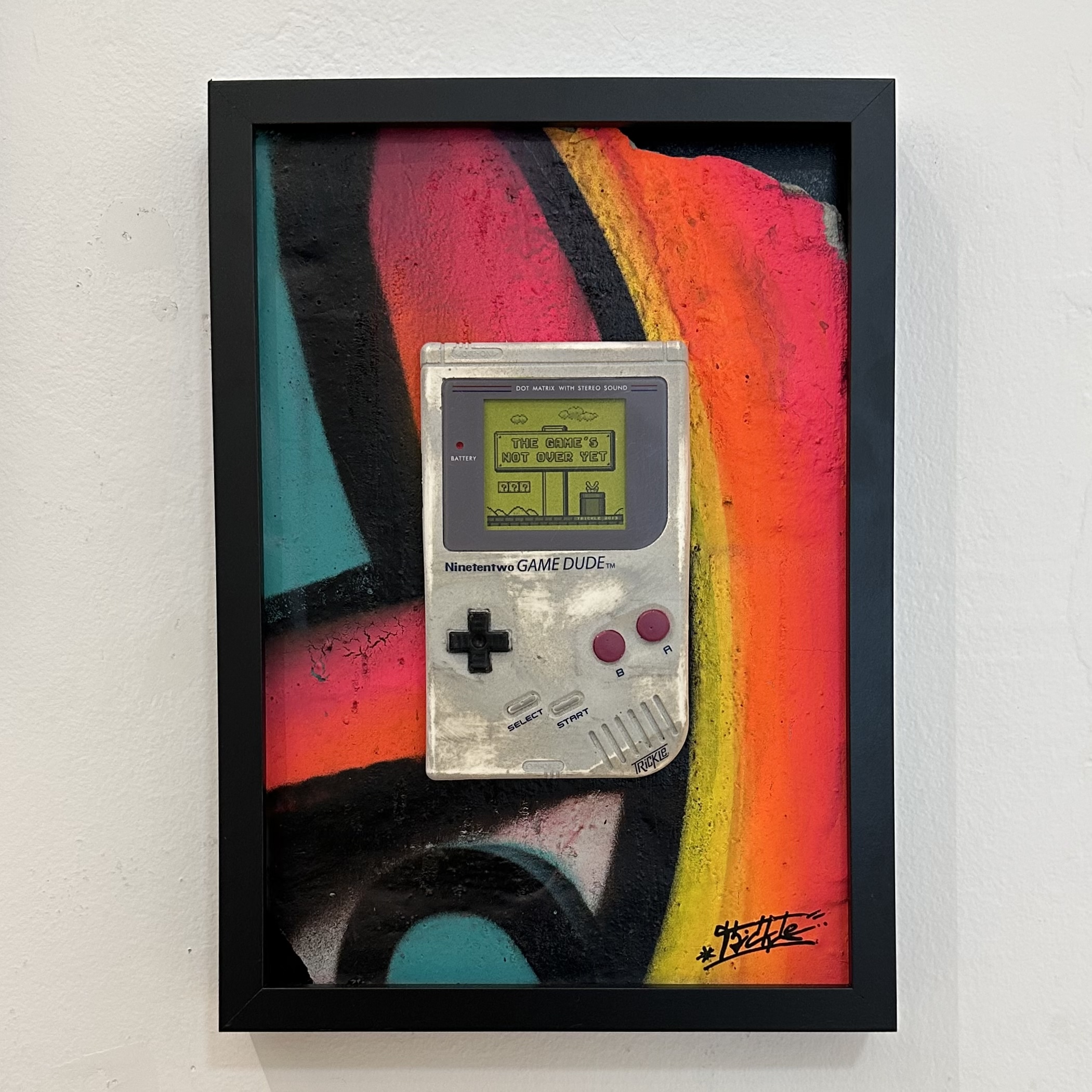
The grey console form in Trickle’s THE GAME’S NOT OVER YET appears to stand proud of its coloured background. That visible relief is a reason to ask about the object, rather than treat its catalogue dimensions as everything needed to bring it into a workplace.
Suppose you have identified it as a possible acquisition and already discussed your project. The next decision is whether the work and the proposed site can be brought together on terms everyone understands. Ask the gallery for the missing work information, involve an appropriately competent installer and the person responsible for the premises, and agree who will confirm each arrangement before delivery is scheduled. These are planning suggestions, not a description of an installation service supplied by Galerie Dumas.
View THE GAME’S NOT OVER YET and its catalogue details · Explore Trickle’s practice
In brief
An artwork choice does not settle delivery or installation. Before agreeing dates, clarify the work’s requirements, who can authorise intervention at the site, who will receive and handle it, and how installation will be arranged. Keep costs and unconfirmed details explicit. A named contact at each stage is more useful here than another general project brief.
What the photograph cannot tell you
The catalogue lists THE GAME’S NOT OVER YET as a 2024 work in a special plaster mix, measuring 32 x 23 cm. The photograph shows a black frame around the coloured surface and console form. It does not establish weight, depth, fixing method, frame inclusion, condition, safety or physical stock. Nor does it show a client office installation.
Ask the gallery which complete dimensions and handling information can be supplied, whether the frame shown is included, and which requirements still need confirmation. The installer and site representative need reliable information about the particular object and premises before assessing the proposed installation. A photograph is not a mounting specification; this article does not prescribe fixings or drilling.
Can the work reach the agreed handover point?
A delivery address leaves several questions unanswered. In a hypothetical office project, the building might accept deliveries only during a booked window, or require access through a particular entrance. Who can confirm that window, arrange entry and meet the carrier? Does the agreed delivery end at reception or somewhere else? Who is responsible for moving the work from that point?
Ask the relevant providers what information they need about the access route, any stairs or lift restrictions, and the packaged work. Let competent people assess suitability rather than guessing from the artwork’s listed size. Agree what happens if access is unavailable or the room is not ready, including who must approve any revised arrangements and costs.
If photographs are needed to explain access, share only the relevant views, with no people, client information or confidential screens visible.
Who may authorise the installation?
The person approving the purchase may not have authority to permit work on the premises. Identify the site representative who can confirm any necessary owner or building-management permission, restrictions and access arrangements. Ask who will obtain that permission and how it will be confirmed before intervention begins.
Then establish who will appoint an appropriately competent installer, who will supply the work information, and who will agree the proposed installation arrangements with the site representative. Ask whether a site assessment is needed. Do not assume the gallery supplies installation, that a carrier will install the work, or that permission to enter includes permission to alter a wall.
Agree the handover before fixing the date
Reception, unpacking, installation and the final handover may involve different people. Ask who takes responsibility at each transition, who will check and record the work’s condition, and whom to contact if something is missing or appears damaged. Clarify handling and insurance responsibilities with the relevant parties rather than treating them as included by default.
A short written confirmation can capture the agreed delivery point and window, the receiving contact, the installation appointment and the person accepting the completed handover. Name whoever is still due to answer an open question. Ask which transport, handling or installation costs are included, which require a separate quote and who must approve them. Confirm dates only once the dependencies have answers; an office opening date and an online listing do not guarantee delivery or installation by then.
The gallery’s eye: leave room to look
Return to the console form against the rough coloured surface. In a possible workplace setting, someone might want to move closer to look at that contrast. Keep that possibility in the discussion with the installer and site representative without turning it into an assumption about safe placement. This is a proposed way of looking, not Trickle’s stated intention or a claim that the work suits a particular office.
Take the unresolved questions to the gallery
Use the exact work title and link when asking what information is available and which arrangements remain yours to organise. If a visit would help, see how to arrange a visit to Galerie Dumas. Ask whether this particular work can be viewed on the date you have in mind.
The artwork page also offers a direct purchase route; a conversation is optional, not a condition of buying. Delivery and installation arrangements still need their own confirmation. A catalogue listing alone does not establish current availability or a promised arrival date.
Related posts


